
Understanding Retaining Walls: Function, Types, and Construction
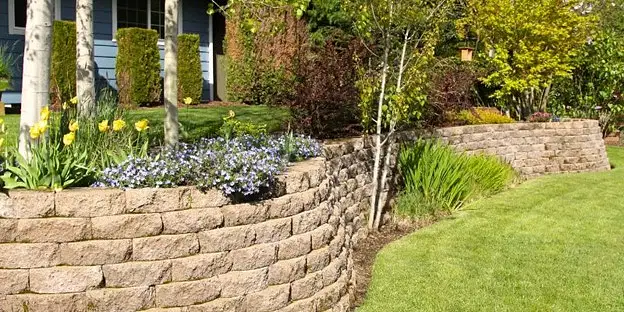
Retaining walls are an integral part of residential and commercial landscaping designs. They provide structural support enhance the aesthetic appeal and make uneven or sloping terrains accessible. Knowing their types, and how they are constructed is a must, whether it is a small backyard oasis or a large commercial property. Let’s dive into the basics, their types, and considerations when building one.
What Are Retaining Walls?
Retaining walls are designed to hold back the earth and prevent sliding down on the sloping earth. They would be ideal for properties characterized by uneven surfaces as they may create level space for gardening or patios. In addition, they give a property enhanced aesthetic value besides functionality. Here, they can present a design where the architectural features are complemented.
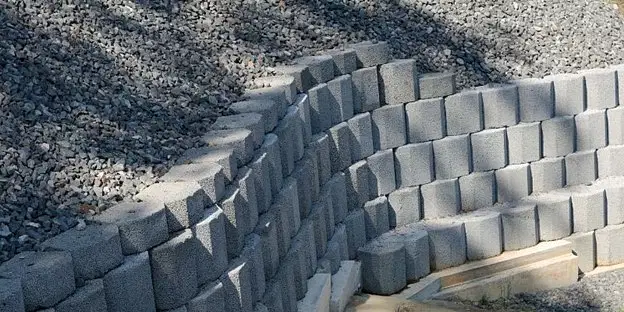
The retained soil exerts gravity and lateral pressure, making a retention wall be designed and constructed correctly. It is at this point that an excellent construction company in St. Louis, such as Brico, proves very handy.
Functions of Retaining Walls
They perform a few crucial functions. Some of the functions include:
- Erosion Control: They control soil erosion on sloping land. They make the ground stable.
- Water Management: They can be designed in such a manner that the flow of water can be changed; thus, the risk of waterlogging and degradation of soil is prevented.
- Optimization of Space: The sloping ground can be levelled, and its space usage can be optimized for functional or aesthetic purposes.
- Structural Support: They support where they are needed to prevent slanting off of soil or landslides in steeper gradients of a piece of property.
- Aesthetic Appeal: With the right materials and design, they can change the outlook of outdoor spaces hence making them appealing to the eye.
Types of Retaining Walls
There are a large number of varieties. Each kind falls into one or more classifications in terms of advantage and construction. A wall usually depends upon parameters such as the steepness of the slope, the nature of the soil, or preferences for beauty.
The following represents a list of the most common types.
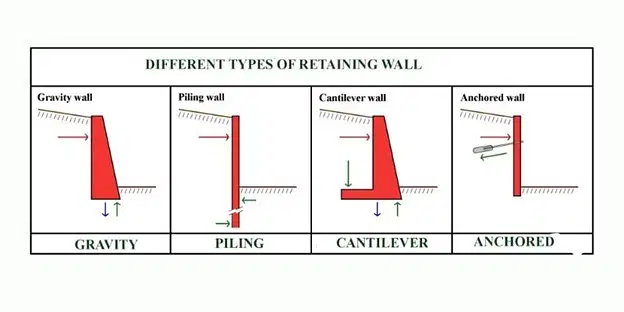
- Gravity retaining walls:
They are resistant to soil pressure on the opposite side due to self-weight. It mainly depends upon the construction materials of heavy walls like stones, concrete, and bricks. They suit for the small height and medium size of the wall, available in classical robust design.
- Cantilevered Retaining Walls
Reinforced concrete structures include an L-shaped base and thin stem with a base slab, in which the extension extends under the soil to stabilize further. Cantilevered walls, which can absorb enormous loads, are quite effective for higher walls.
- Sheet Pile Retaining Walls
Sheet pile walls consist of thin sheets of steel, wood, or vinyl being driven into the ground. They have also been deemed proper for soft soil regions and space-consuming regions. They are not considered decorative in their aspect; rather, they are less costly, which renders them appropriate for certain applications.
- Anchored Retaining Walls
In this type, they are held to the surrounding soil or rock with cables or rods. They are used where immense pressure is involved or at locations where the load has to be carried by a lot of force. They can merge with any other types of retaining walls for extra strength.
- Segmental Retaining Walls
This type is interlocking concrete blocks. It is a favorite owing to its flexibility, durability, and aesthetic appeal. SRWs could be a great DIY or professional installation option.
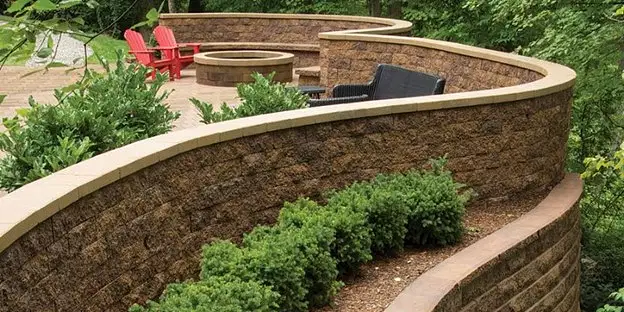
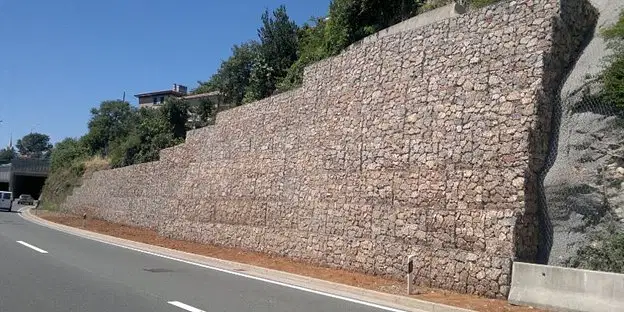
- Gabion retaining walls
Made of wire mesh that is filled with rocks or other materials. They are environment-friendly, and economical, and offer a natural look of the wilderness. They are perfect for places where erosion occurs or tends to flood.
Things to Consider When Constructing a Retaining Wall
There are a few things that have to be considered in the construction
of it to be effective and durable. Some of them include:
- Type of soil
The design and construction may depend on the type of soil on your land. For example, clay retains more water than any other type and exerts pressure; for such a soil condition, much stronger walls are necessary.
- Drainage
The water accumulation at the back of the retaining wall is crucial. As it adds more pressure to it and can break easily. Thus, weep holes or drainage are added to the design to reduce its risk.
- Height
The design will depend on how tall it would be since higher walls will have stronger methods of building and using sturdier materials to stand more pressure due to added stress on it.
- Building Codes
Some higher walls fall under permit and local building codes. Companies that have professionalism like Brico would ensure that all regulation requirements are met in St. Louis.
- Material Choice
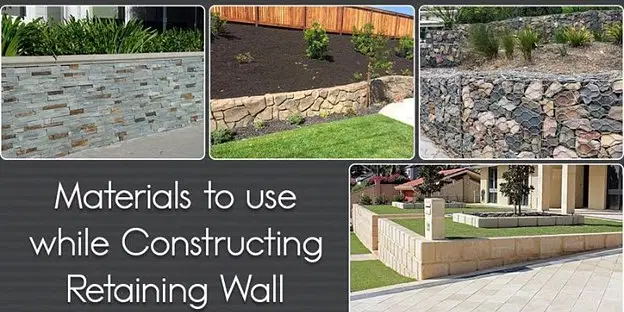
Materials will be those which define longevity, beauty, and cost. Major types of materials include natural stone, concrete, brick, and timber. This depends on which will make them look beautiful and strong.
- Professional Expertise
By selecting an experienced construction firm, one constructs a retaining wall to last. A good construction company in St Louis, which specializes in designs and constructions suited to every client’s demand, is Brico.
Construction Process
Steps to be taken in the construction are the following steps:
- Plan and Design
- Know the topography of the site and the conditions of the soils.
- Kind of wall and materials to be used
- Draw a plan on the design, also drainage
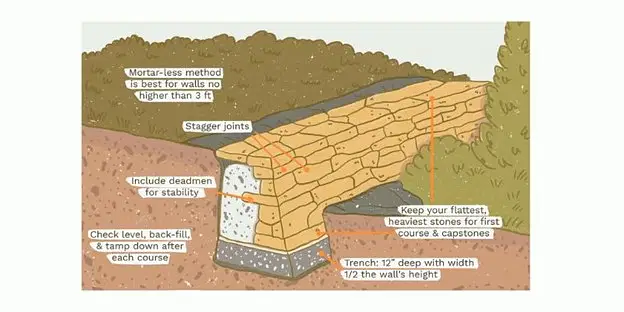
- Excavation and Foundation
- Dig the area for the construction of the wall.
- Good base using compacted gravel or concrete.
- Wall Construction
- Build up layers of the wall, every layer must be level and aligned.
- Add reinforcement if necessary and can be geogrid or rebar
- Installation of Drainage
- Installation of pipes or weep holes if there is going to be some water gathering on the backside of the wall
- Backfilling and Compaction
- Position some gravel or the choicest materials to fill up the area at the back of the wall
- Soil stability
- Finishing Works
- Give aesthetics to this one as finishing works such as paving, lightening, and planting.
Why Brico for retaining walls?
The two variables are mostly significant in experience and skills. Brico, which is a construction company in St Louis, boasts good output while designing and building a wall to be efficient and last longer in a good look with an attractive appearance.
This makes their service excellent quality for which they take up projects as priority works to work with this area.
Check out the website for more information regarding Brico’s services and portfolio. Brico has the capacity and resources at hand for any project to be created in your residential property and up to that huge commercial project on your list to bring out your vision of bringing it alive.
Conclusion
Retaining walls is critical in managing sloped terrain for the prevention of erosion and enhancing outdoor usability. Knowing the different types and how it’s constructed will help you decide on your property. To a St. Louis individual, rest assured that a reliable construction company like Brico, promises no hassle and a long-lasting wall. Call Brico today, and get their experts to construct your dream landscape with a custom wall.