
Preventing Retaining Wall Frost Heave in Winter
Missouri winters are famously unpredictable. We can experience freezing rain, heavy snow, and sunny thaws all within the same week. While we might be used to this fluctuating weather in the St. Peters area, our outdoor landscapes are often silently struggling against it. One of the most destructive forces your property faces during the colder months is the cycle of freezing and thawing, which can wreak havoc on hardscaping and foundations.
For homeowners with sloped yards or terraced landscaping, understanding how to prevent retaining wall frost heave is essential for protecting your property. When the ground freezes, the moisture trapped inside the soil expands. This expansion exerts an immense amount of pressure on anything in its way, including the heavy structural blocks or poured concrete holding back your soil. Over time, this pressure can compromise even the most robust structures if they weren't properly engineered to handle the stress.
At Bri-Co Construction, we bring a true Show-Me state attitude to our work: we believe in building things right the first time, with transparent processes and proven results. We frequently help homeowners who are dealing with failing walls built by cut-rate contractors who didn't account for our local climate. By understanding the mechanics of frost heave and knowing what to look out for, you can take proactive steps to ensure your property remains safe and beautiful year after year.
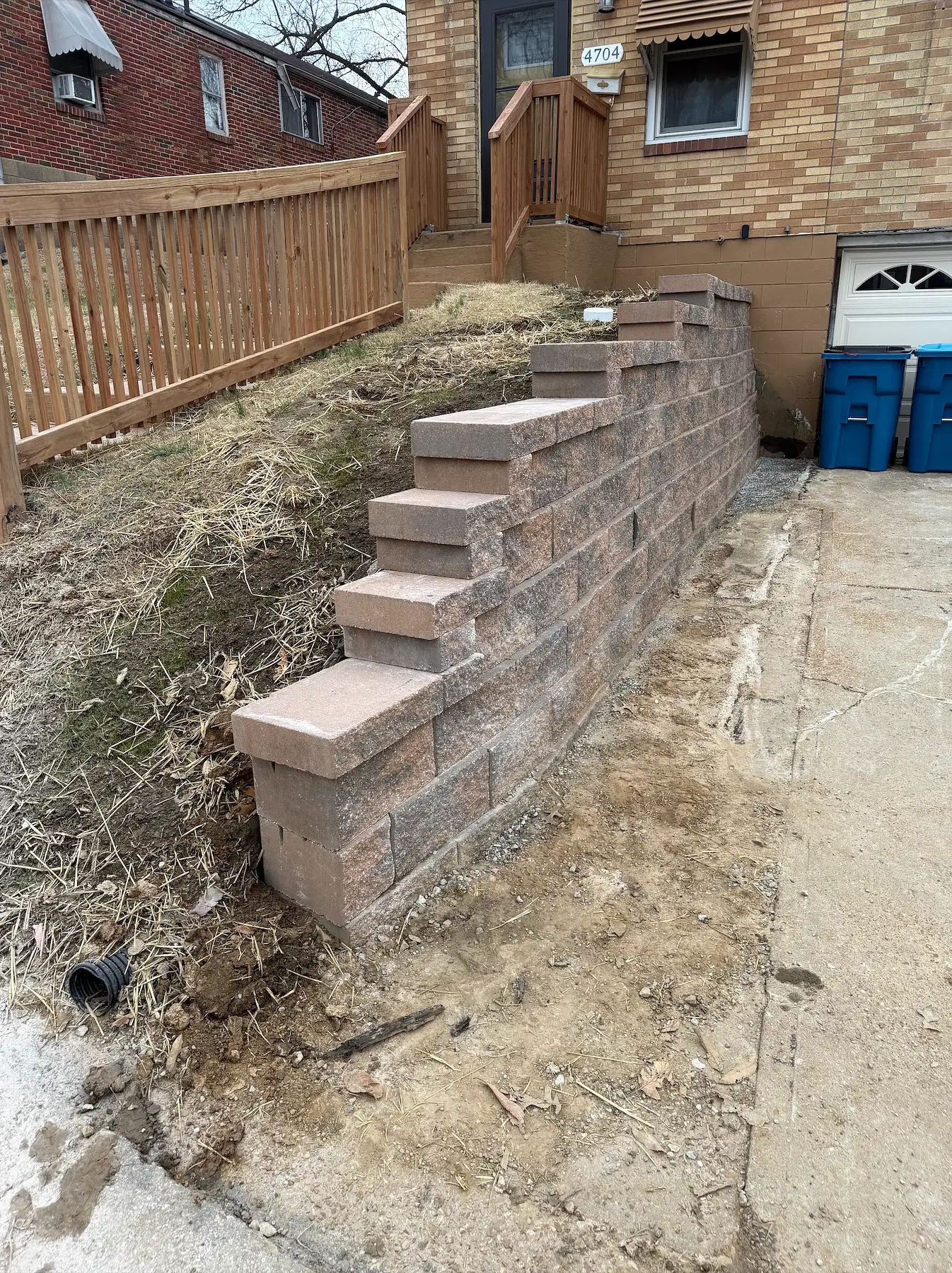
Recognizing the Early Warning Signs
The pressure exerted by expanding frozen soil is staggering, often pushing retaining structures outward or upward. Unfortunately, by the time many homeowners notice a problem, significant structural compromise has already occurred. Being able to identify the early signs of retaining wall frost damage can save you from needing a complete and costly demolition and rebuild down the road.
Keep a close eye out for these common indicators:
- Bowing or bulging in the center of the wall
- Blocks or stones that appear out of alignment or pushed forward
- Longitudinal cracks running through the mortar, concrete face, or individual blocks
- A noticeable forward lean that wasn't there during the summer
- Sinkholes or pooling water in the soil directly behind the structure
If you spot any of these issues, it is a clear indicator that hydrostatic pressure (water pressure) and ice expansion are actively working against your wall. While minor settling is normal over decades, rapid changes after a hard freeze are a red flag that requires professional attention.

The Core Solution: Proper Drainage and Backfill
The secret to preventing frost heave isn't necessarily building a thicker wall; it's about controlling the water behind it. If water cannot pool and saturate the soil behind your blocks, it cannot freeze, expand, and push against the structure. This is why proper drainage design is the absolute cornerstone of any lasting retaining walls.
When we construct a retaining system, we never use native clay soil right up against the back of the structure. Missouri clay holds water like a sponge. Instead, we excavate an adequate zone behind the wall and backfill it with clean, crushed gravel. This creates a highly permeable area where water can quickly drop down to the base. At the base, we install a perforated drain pipe (often called a French drain system) wrapped in landscape fabric to prevent clogging. This pipe captures the descending water and carries it safely away from the structure and your home's foundation.
Additionally, proper soil compaction during the build process ensures that the ground won't settle unevenly, which can also create depressions where winter rain and snowmelt collect. It is this combination of expert grading, strategic backfilling, and precise drainage that separates a wall that lasts a lifetime from one that fails in five years.
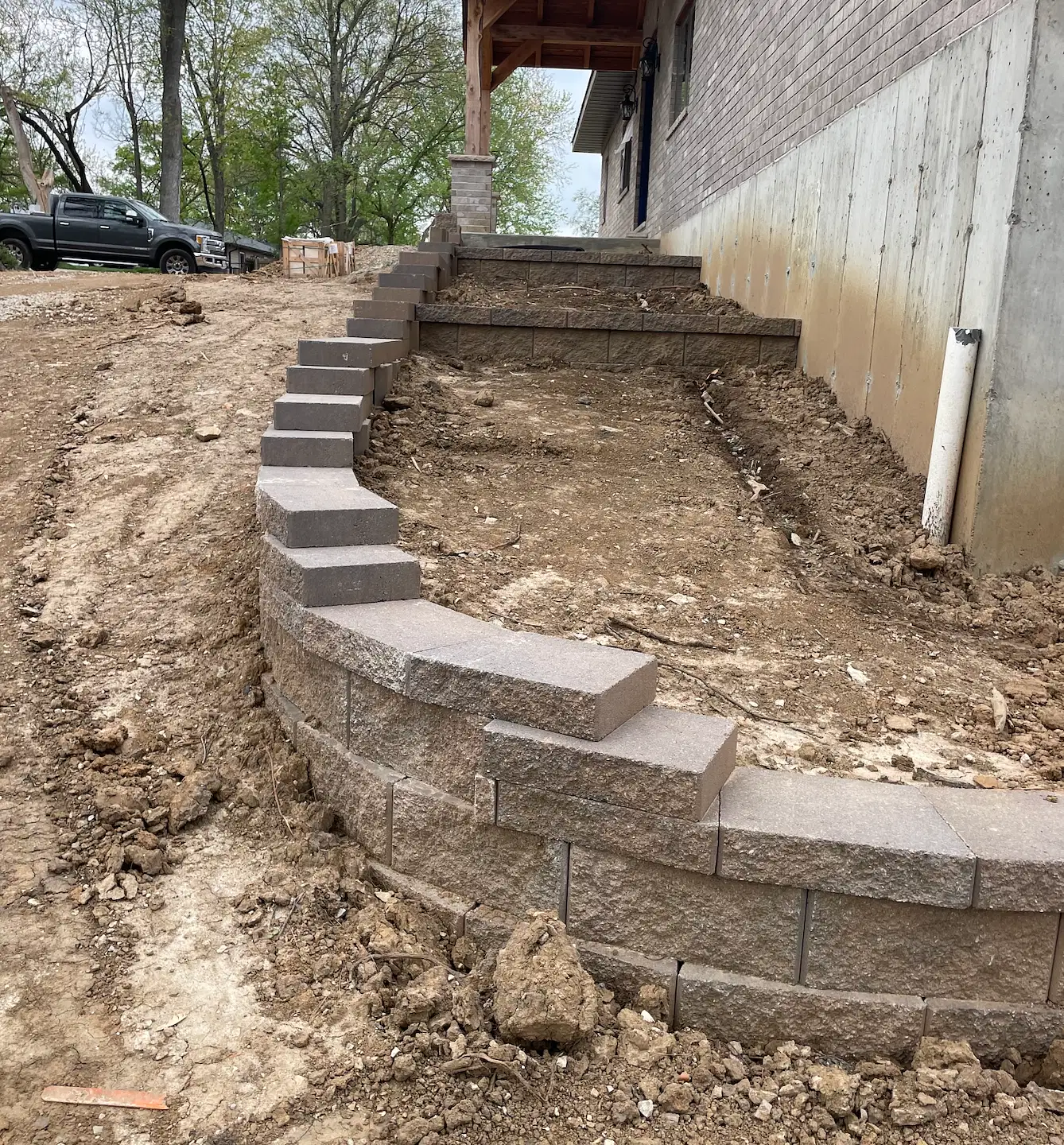
Your Winter Retaining Wall Drainage Checklist
While the heavy lifting of drainage installation happens during the initial build, there are steps you can take as a homeowner to maintain that system and ensure it functions properly before the deep freeze sets in. We recommend walking through this winter retaining wall drainage checklist every autumn:
- Clear the Weep Holes: Inspect the small drainage holes at the bottom of your wall. Ensure they are free of mud, leaves, and debris so water can escape freely.
- Check the Drain Pipe Outlets: Locate where your underground drainage pipe empties into your yard or storm system. Remove any overgrown vegetation, rocks, or debris blocking the exit.
- Inspect the Grading: Look at the soil behind the top of your wall. It should slope slightly away from the back of the wall, directing surface runoff away from the trench. If you notice dips or sinkholes, fill them in to prevent water pooling.
- Clean Your Gutters: This might sound unrelated, but if your roof downspouts are emptying water directly above or behind your retaining wall, the system will become overwhelmed. Ensure downspouts direct water far away from the structure.
Taking an hour on a crisp fall weekend to perform these simple checks can significantly reduce the risk of trapped water freezing and damaging your landscape.
Secure Your Landscape with Bri-Co Construction
Dealing with the aftermath of a collapsed retaining wall is stressful, messy, and entirely preventable with the right initial engineering. If your current structure is showing signs of seasonal distress, or if you are planning a new landscaping project to reclaim a sloped yard, partnering with an experienced general contractor is crucial.
At Bri-Co Construction, we understand exactly what it takes to build structures that withstand the demanding climate of West County and the greater St. Louis region. We pride ourselves on transparent pricing, precise estimating, and utilizing advanced techniques to deliver results you can trust. Don't leave your property vulnerable to the winter weather. Contact us today to schedule a consultation, and let's ensure your retaining walls are built to stand strong for decades to come.