
Mastering Yard Grading for Soil Erosion Control
Spring showers in Missouri bring beautiful blooms, but for many homeowners in the Florissant Valley, heavy rains also bring a recurring headache: a washed-out yard. When water pools around your foundation or rushes down a slope, carrying away precious topsoil, it is more than just a landscaping nuisance. Left unchecked, poor drainage can threaten the structural integrity of your home, drown your garden beds, and create unsafe, slippery areas on your property.
If you have noticed deep ruts forming in your lawn after a storm or water pooling ominously close to your basement walls, you are likely dealing with a landscape pitch issue. While it might be tempting to just throw down some extra topsoil and hope for the best, temporary fixes rarely stand up to the unpredictable Midwestern weather. Protecting your property requires a fundamental correction of the land's slope to manage surface runoff effectively.
At Bri-Co Construction, we have helped countless families reclaim their outdoor spaces. In this guide, we are going to explore how professional yard leveling techniques for sloped properties can permanently solve drainage issues, prevent heavy soil erosion, and give you peace of mind during the rainiest seasons.
The Science of Correcting Landscape Pitch for Surface Runoff
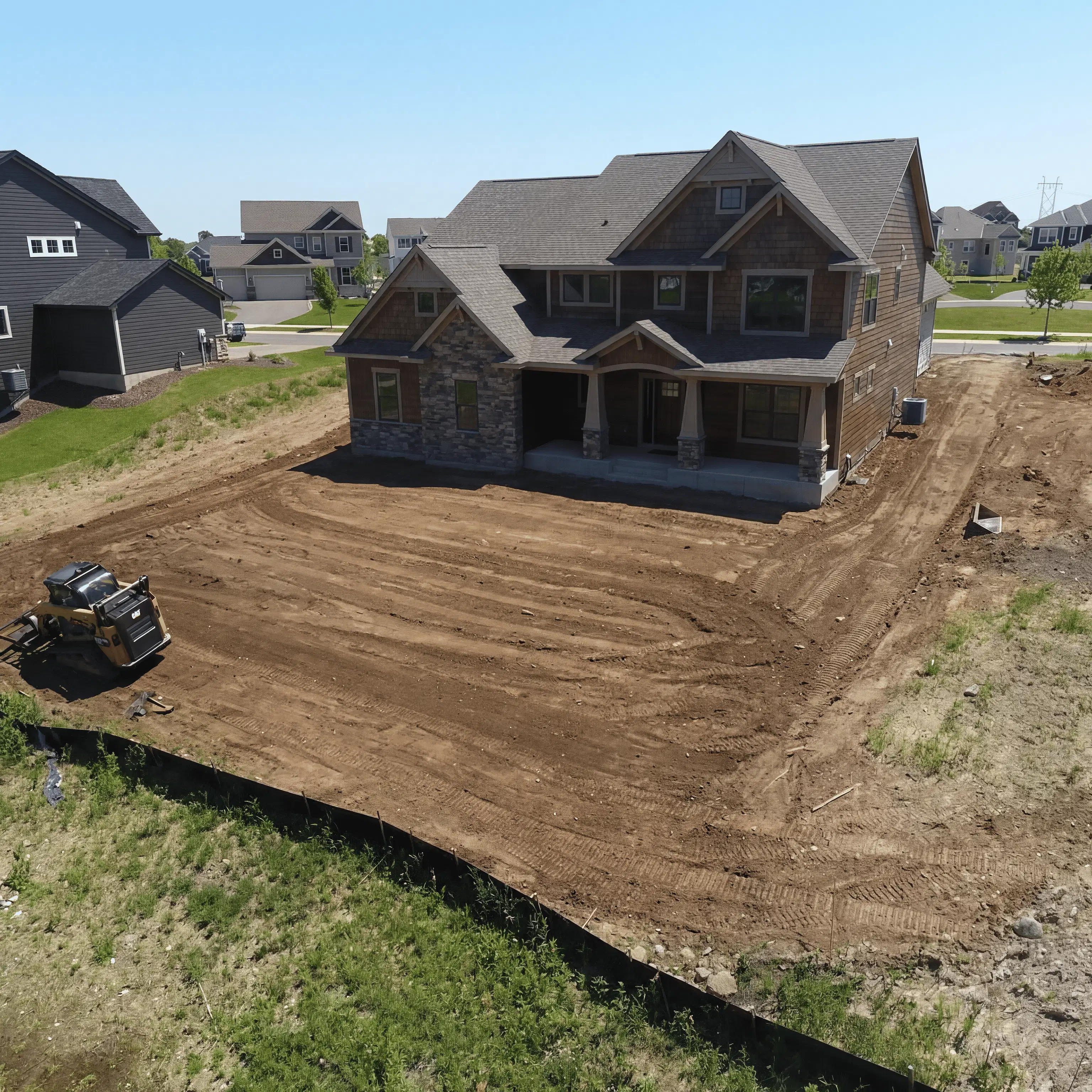
To understand why your yard is eroding, we have to look at the invisible forces at play. Every piece of land has a natural pitch—the angle at which the ground slopes. When a home is built, the land immediately surrounding the foundation is supposed to be sloped downward and away from the structure. Over the decades, however, settling earth, shifting weather patterns, and ongoing landscaping changes can alter this essential gradient.
When the ground slopes toward your home or features uneven depressions, water has nowhere to go. This leads to surface runoff moving too quickly down steep sections, stripping away the topsoil and carving unsightly trenches into your lawn. Correcting landscape pitch for surface runoff is a precise process of measuring the current slope, identifying where water naturally wants to travel, and reshaping the earth to gently guide that water away from vulnerable areas—usually toward a street storm drain or a designated drainage swale.
For many of the mid-century ranch homes in North County, older landscape designs did not account for the volume of runoff we see today. By implementing strategic yard leveling techniques for sloped properties, we can intercept that water before it gains momentum, dramatically reducing its erosive power and protecting the integrity of your lawn.
Understanding Rough Grading vs Finish Grading Differences
When homeowners reach out to us about serious yard issues, they often wonder what the actual process of fixing it looks like. Professional land leveling is generally broken down into two distinct phases: rough grading and finish grading. Understanding the rough grading vs finish grading differences can help you know exactly what to expect when a crew arrives at your home.
Rough grading is the heavy lifting phase. This is where we bring in specialized equipment to move significant amounts of dirt, reshaping the fundamental contour of your property. During this stage, our focus is entirely on drainage and subsoil structure. We carve out the necessary slopes, establish proper elevations, and ensure that the new layout will actively push water away from your foundation. Because this phase involves moving deep earth, it is also when we pay close attention to underground utilities and local regulations, ensuring that all work complies with St. Louis County standards and strictly respects any MSD lateral lines on your property.
Once the foundational shape is established, we move to finish grading. This is the detail-oriented work. We spread a smooth, even layer of high-quality topsoil over the rough grade, removing any remaining rocks, roots, or debris. Finish grading creates the final, pristine canvas that is ready for sod, grass seed, or new garden installations. While rough grading solves the structural and drainage problems, finish grading ensures your yard looks beautiful and is ready to thrive.
How Proper Land Grading Prevents Heavy Soil Erosion
Soil erosion does not just make your yard look messy; it actively strips away the nutrients your lawn needs to survive and destabilizes the ground around your home. As water continually washes away the top layer of earth, it exposes tree roots and undermines paved surfaces like driveways and walkways, leading to cracking and settling over time.
Proper land grading prevents heavy soil erosion by fundamentally changing how water interacts with your property. Instead of allowing runoff to build speed and carve destructive channels, a professionally graded yard slows the water down and disperses it evenly. When water flows at a controlled, gentle pace, the soil can absorb it properly, nourishing your lawn rather than tearing it apart.
In cases where the natural slope of the property is exceptionally steep, grading alone might not be enough. In these situations, we often combine our earthwork with Retaining Walls. A well-designed retaining wall can step a steep hill down into manageable, flat terraces, breaking up the flow of water and providing a flat, usable outdoor living space that is highly resistant to erosion.
Reclaiming Your Outdoor Space
You should not have to spend every heavy rainstorm worrying about your basement or watching your backyard wash away. Investing in a permanent, professionally engineered drainage solution protects one of your most valuable assets while giving you back a functional, beautiful lawn.
At Bri-Co Construction, we pride ourselves on providing highly detailed, transparent estimates with no hidden fees, so you know exactly what it takes to protect your property. We manage every aspect of the project, from securing the necessary permits to managing the final cleanup, ensuring a seamless, stress-free experience for our clients throughout the St. Louis area.
If you are ready to say goodbye to standing water and muddy runoff, it is time to bring in the experts. Learn more about our comprehensive Grading Services and how we can tailor a solution to your specific landscape. Contact us today to schedule a consultation and take the first step toward a safer, drier, and more beautiful yard.